Conditions and services
Diastasis recti in men
Diastasis recti is a separation of the two rectus abdominis muscles along the midline of the abdomen. In men it can follow abdominal wall strain or significant weight change, and it often occurs together with an umbilical or ventral hernia.
Last reviewed: November 24, 2026, by Dr. Nojan Toomari, DO, FACS
What diastasis recti is
The two "six-pack" muscles (rectus abdominis) are joined along the midline by a band of connective tissue called the linea alba. In diastasis recti, this band stretches and thins, and the muscles move apart. The tissue is stretched rather than torn open, so diastasis by itself is not a hernia.
In men, this can follow abdominal wall strain or significant weight change, including weight gain or loss. An umbilical or epigastric hernia can be present along the same midline. Diastasis is also common after pregnancy; see diastasis recti in women.
Symptoms
People often notice a ridge, pooch or "doming" down the middle of the abdomen when they sit up or strain, a feeling of core weakness, or discomfort with lifting, coughing or sneezing. Some people also have low back discomfort. A painful or firm bulge at the belly button may be a hernia and should be examined.
How it is evaluated
Dr. Toomari can usually assess the separation and check for a hernia during an office exam. When needed, imaging such as a CT scan helps look for a hernia and plan treatment.
In Dr. Toomari's practice, the same measurements used after pregnancy also apply in men: a separation of about 1.5 to 2 cm at the belly button is generally considered a normal finding. A separation greater than 2.7 cm at the belly button is considered a pathological diastasis and is more likely to cause a visible bulge or functional problems.
Treatment without surgery
Not everyone with diastasis recti needs an operation. Physical therapy, core retraining and changes to how you lift are reasonable first steps for many people, especially when there is no hernia and the separation is modest.
When surgery is discussed
Surgery may be discussed when a hernia is present, or when a significant separation remains bothersome after a genuine trial of therapy. When an umbilical or ventral hernia sits within a significant diastasis, repairing the hernia and bringing the separated muscles back toward the midline in the same operation may be considered, so the hernia is not repaired on a stretched midline. Not everyone with both conditions needs this, and the plan is individual.
When surgery is appropriate, Dr. Toomari uses a minimally invasive, robotic-assisted approach when it is safe for your anatomy. His usual technique is a robotic preperitoneal plication, most often with mesh:
- The repair is done robotically through a few small incisions, typically about 8 mm.
- He works in the preperitoneal plane, a space along the inside of the abdominal wall, rather than opening the abdomen with a long cut or lifting a flap of skin.
- Plication means the weakened midline is sewn back together, bringing the left and right abdominal muscles toward the center.
- In most repairs, a piece of surgical mesh is then placed to reinforce the repair.
Open repair is sometimes necessary. The approach is explained in detail on LA Hernia Center.
Diastasis repair is not a tummy tuck
A minimally invasive diastasis repair works on the muscles, and on a hernia if present, from the inside, through small incisions. It does not remove skin, and it still leaves small scars. If loose or hanging skin is the main concern, a plastic surgery consultation about abdominoplasty may be more appropriate.
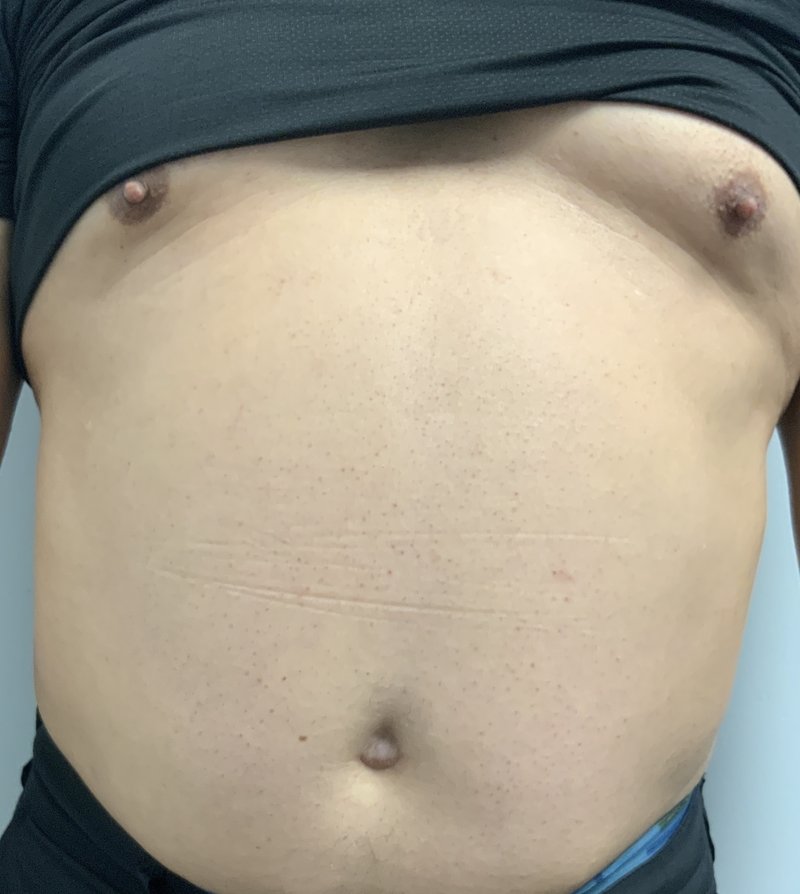
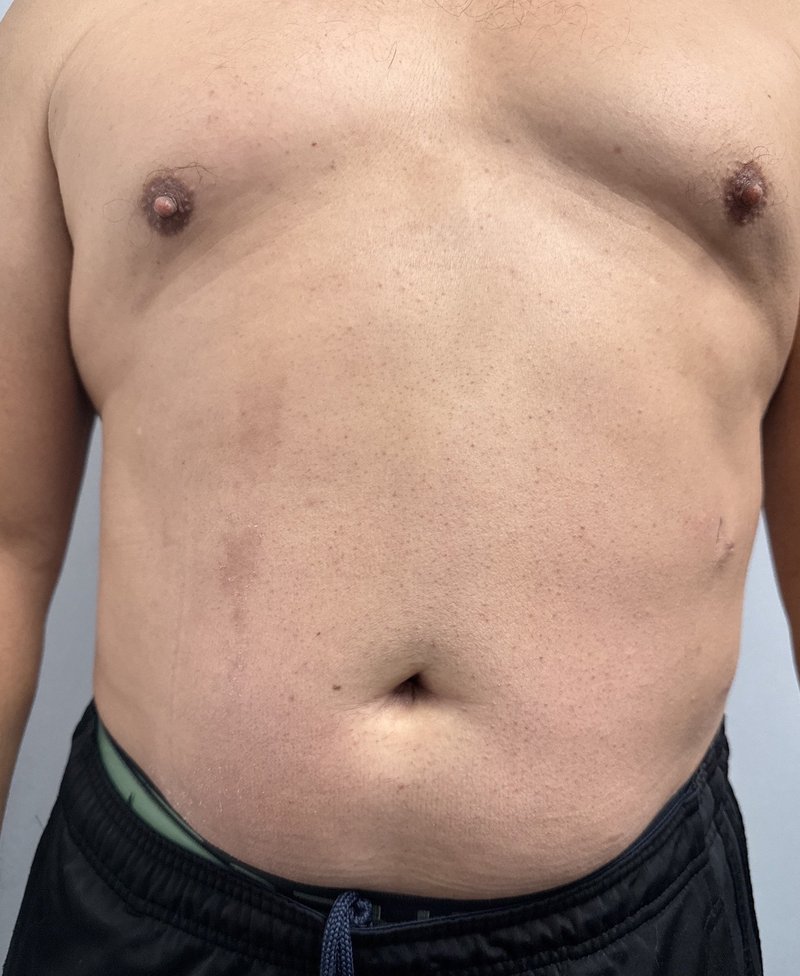
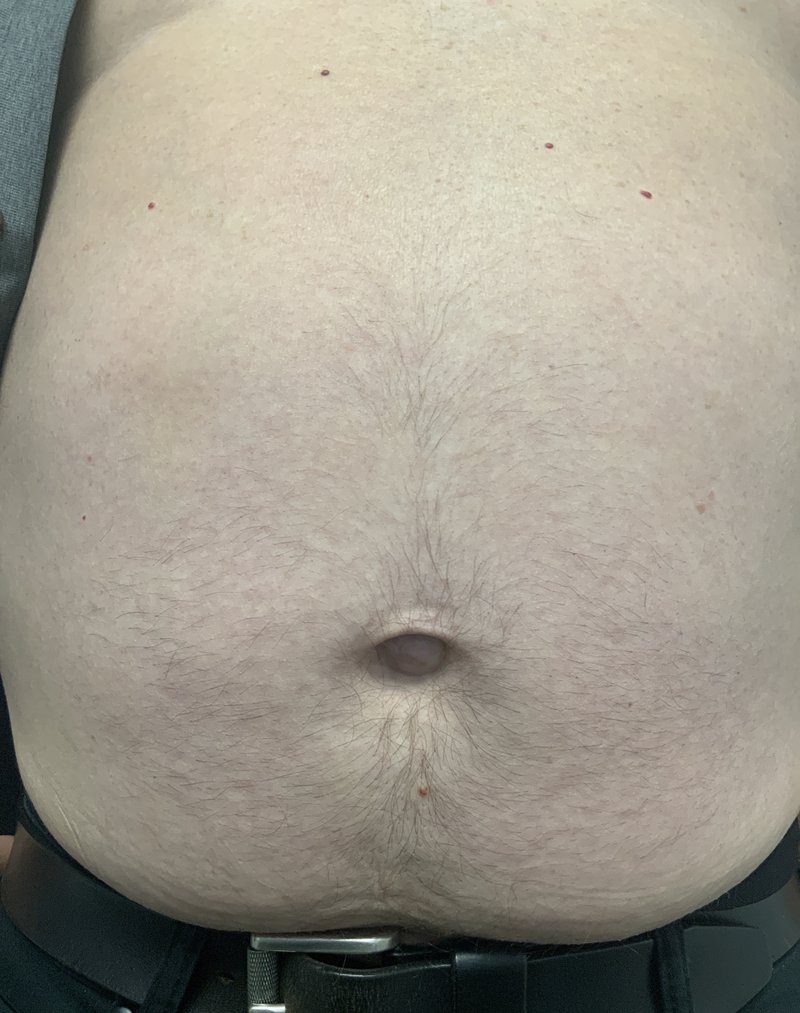
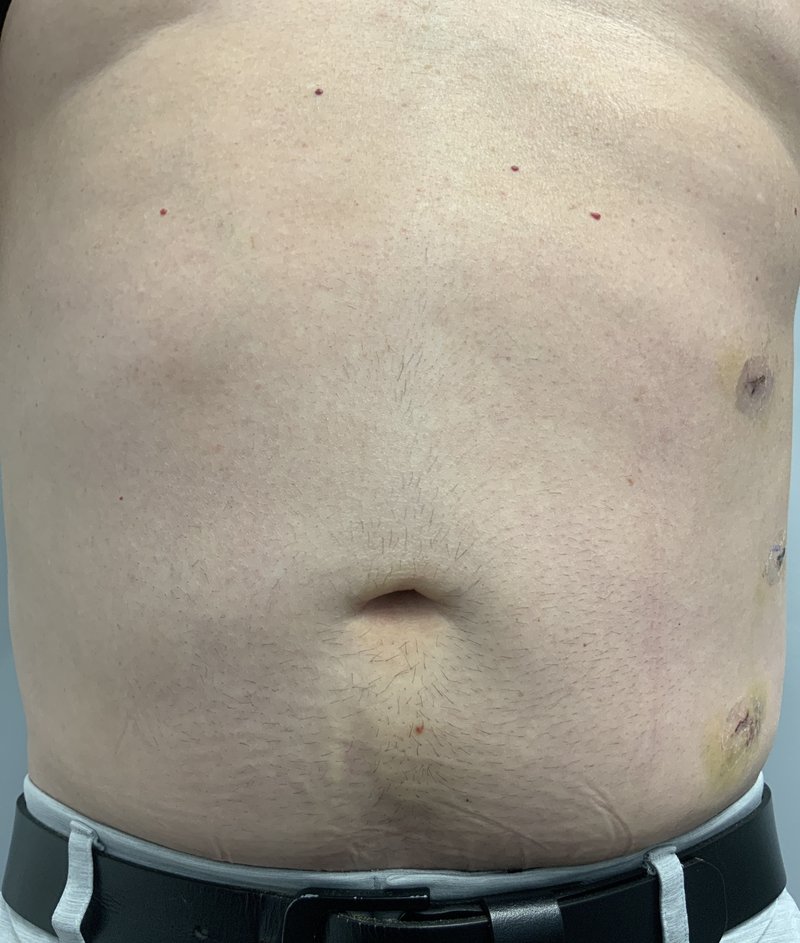
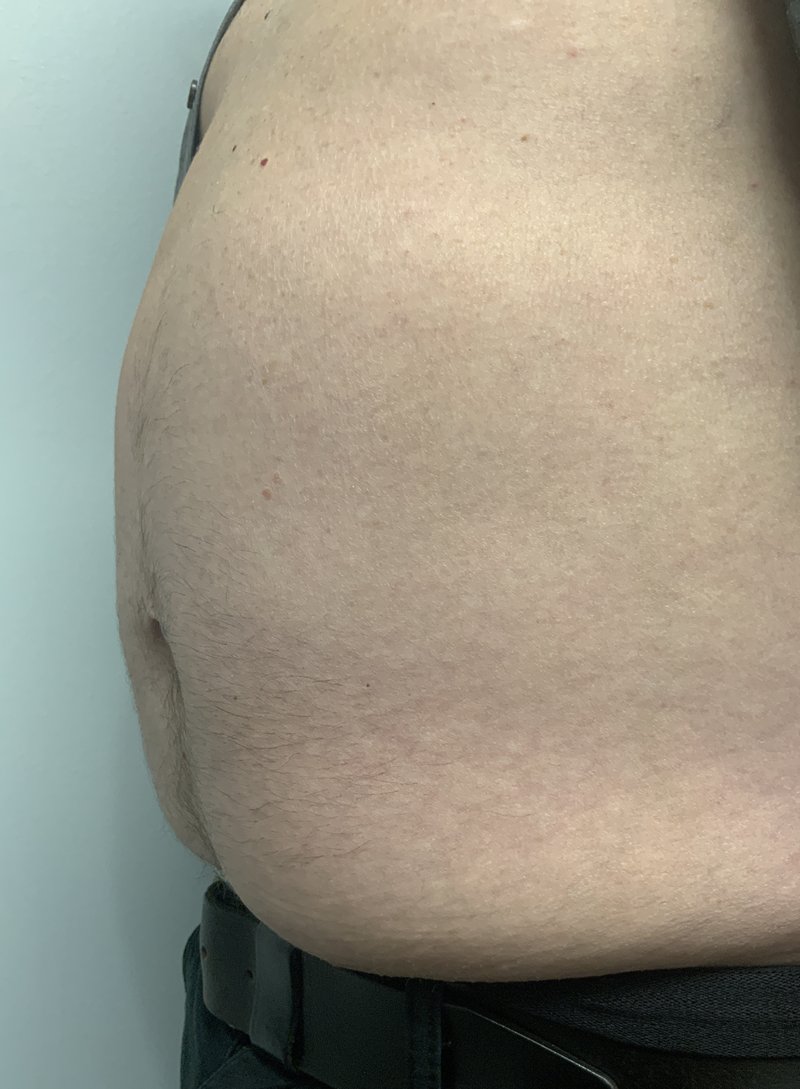
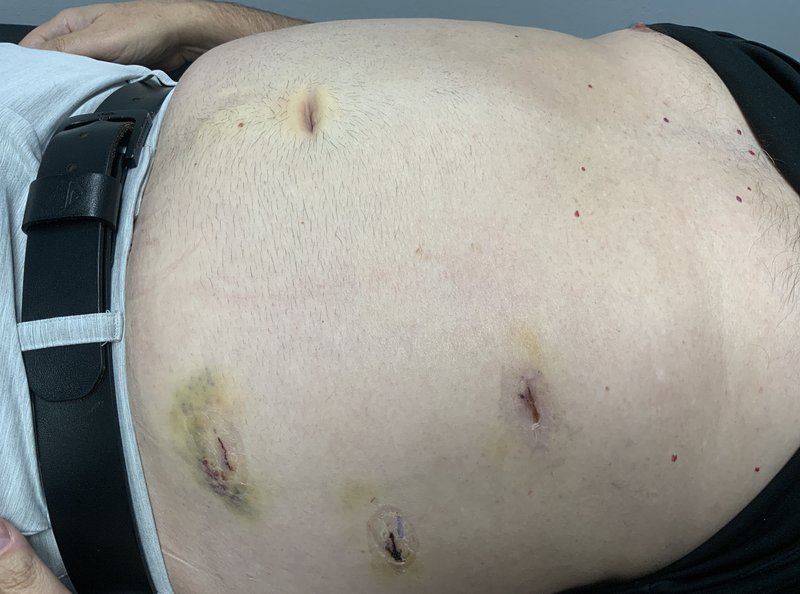
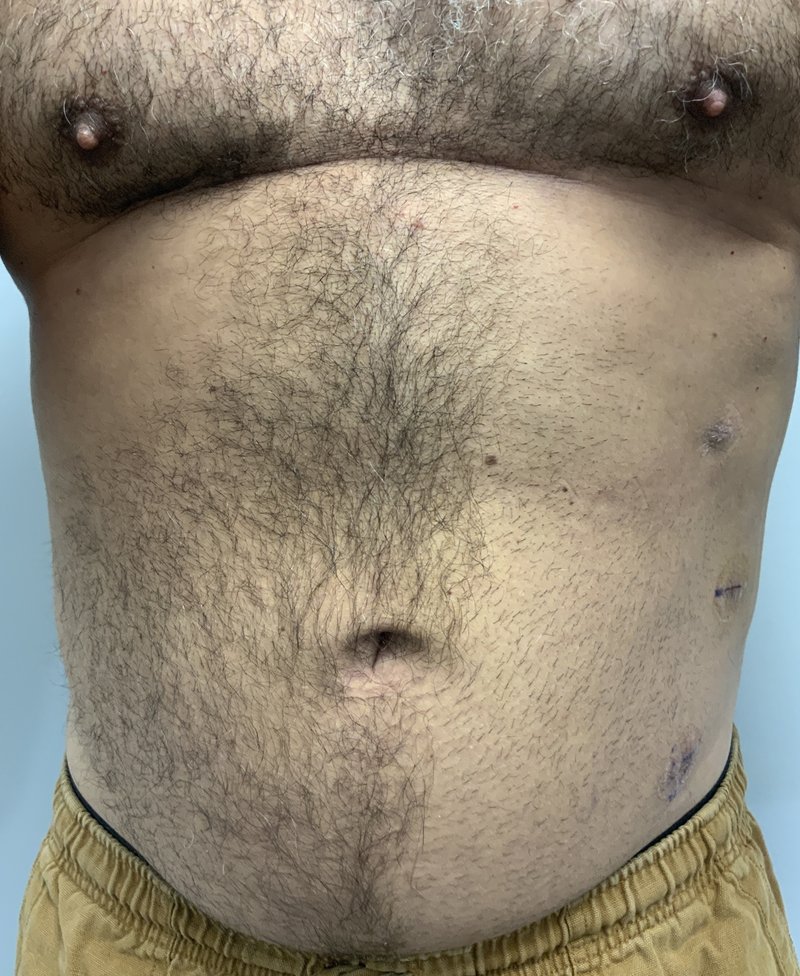
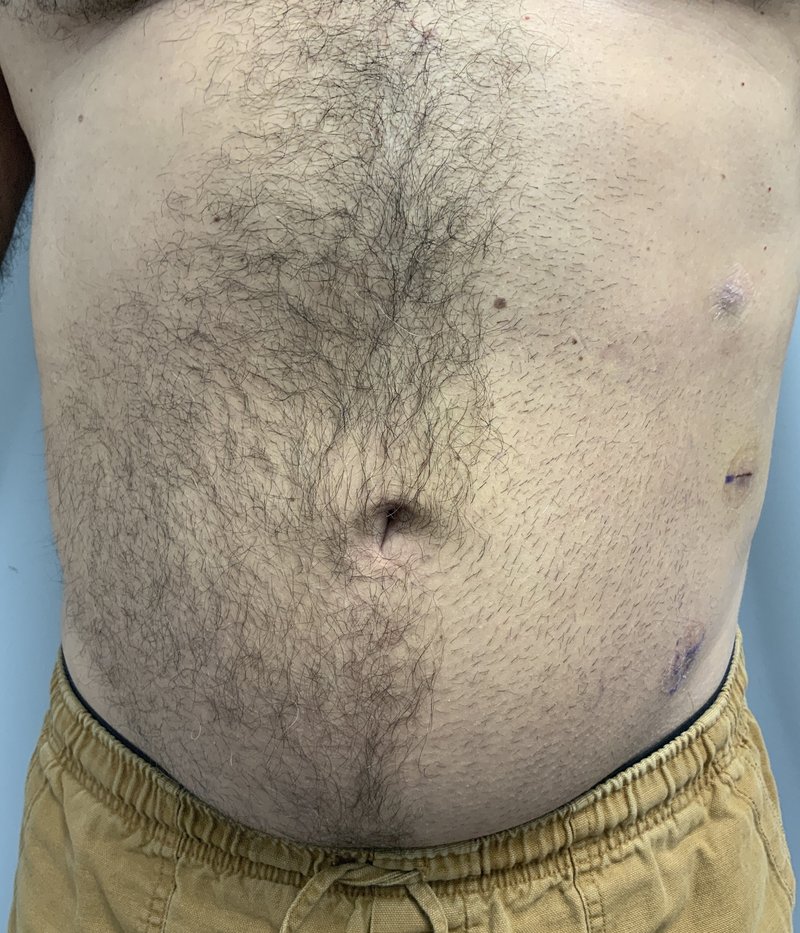
Before and after photographs
Results vary. These photos are examples from patients who consented to website use, not a promise of a particular result. Individual results depend on your anatomy, the repair, and your health.
Risks and recovery
Risks include bleeding, infection, fluid collection (seroma), injury to nearby structures, difficulty urinating for a short time after surgery, ongoing discomfort, recurrence of the separation or hernia, problems related to mesh when it is used, and risks of anesthesia. Some patients notice a slight ridge of skin along the midline after surgery. It is usually minimal, often not noticeable by the two-week postoperative visit, and depends on how wide the diastasis was.
Robotic repairs are outpatient procedures, so you usually go home the same day. Most people return to non-strenuous work in 1 to 2 weeks. Full recovery takes about 8 weeks, and heavy lifting and core strain are limited during that time. You will receive individual instructions for your repair.
When to seek urgent care
Seek care right away, or call 911, if a bulge at or near the belly button becomes painful, firm or discolored and cannot be pushed back in, especially with nausea or vomiting. This can be a sign of a trapped hernia, which needs emergency treatment.
After diastasis or hernia repair, call Dr. Toomari's office if you develop any of the following:
- Persistent fever over 101°F (38.3°C)
- Chills
- Bleeding
- Increasing abdominal swelling
- Worsening abdominal pain, or pain that is not relieved by your medicines
- Persistent nausea or vomiting
- Trouble urinating
- Pus draining from any incision
- Redness around any incision that is getting worse or bigger
- Being unable to eat or drink liquids
Call 911 for severe symptoms.
In-depth education
LA Hernia Center: our hernia and abdominal wall specialty website
Our detailed diastasis recti guide, including the repair approach, mesh placement and a core exercise guide, is published on LAHerniaCenter.com. Care is provided by Dr. Nojan Toomari, DO, FACS, at this Encino office.
To schedule an evaluation, call (818) 570‑1845 or request a callback.
Frequently asked questions
Is diastasis recti only a condition of pregnancy?
No. It is common after pregnancy, but it also occurs in men and in people with obesity or significant weight change. Abdominal wall strain can be part of the picture. An exam can tell whether a hernia is present as well.
Is diastasis recti a hernia?
No. In diastasis recti the midline tissue (linea alba) is stretched and the muscles are parted, but there is no true hole through the abdominal wall. A hernia can exist at the same time, often at the belly button, which is why an exam matters.
Can exercise or physical therapy fix it?
Physical therapy and core retraining help many people, especially when the separation is modest, and are often the right first step. They do not close a true hernia. If the separation stays bothersome after a genuine trial of therapy, or a hernia is present, a surgical discussion may be reasonable.
Will insurance cover repair?
Unfortunately, insurance does not cover diastasis repair. If a hernia is also present, insurance usually covers the hernia portion of the operation. Please call the office for details, specific questions and estimates.
Is diastasis repair the same as a tummy tuck?
No. A tummy tuck (abdominoplasty) is a plastic surgery operation that removes skin and often tightens the muscles through a long lower incision. A minimally invasive diastasis repair addresses the muscle separation, and a hernia if one is present, from the inside. It does not remove loose skin.
Related pages
References
- MedlinePlus (U.S. National Library of Medicine). Diastasis recti. Accessed November 19, 2026.
- MedlinePlus (U.S. National Library of Medicine). Umbilical hernia repair. Accessed November 19, 2026.
- Society of American Gastrointestinal and Endoscopic Surgeons (SAGES). Ventral hernia repair surgery. Accessed November 19, 2026.
References are general patient-education sources from public health agencies and professional societies. They support the general statements on this page and are not a substitute for an individual evaluation.
General education, not medical advice. This page describes common approaches and is not individual medical advice. Whether surgery is appropriate, and which approach, depends on an examination and your own health. Please follow the individualized instructions of your treating clinician.
Last reviewed: November 24, 2026, by Dr. Nojan Toomari, DO, FACS
Talk with our office
Call during office hours, or send a short callback request and a member of our staff will contact you during business hours.
In an emergency, call 911
Online forms and email are not for emergencies and are not monitored as emergency channels. For severe, urgent or life-threatening symptoms, call 911 or go to the nearest emergency department.