Conditions and services
Bikini line cholecystectomy
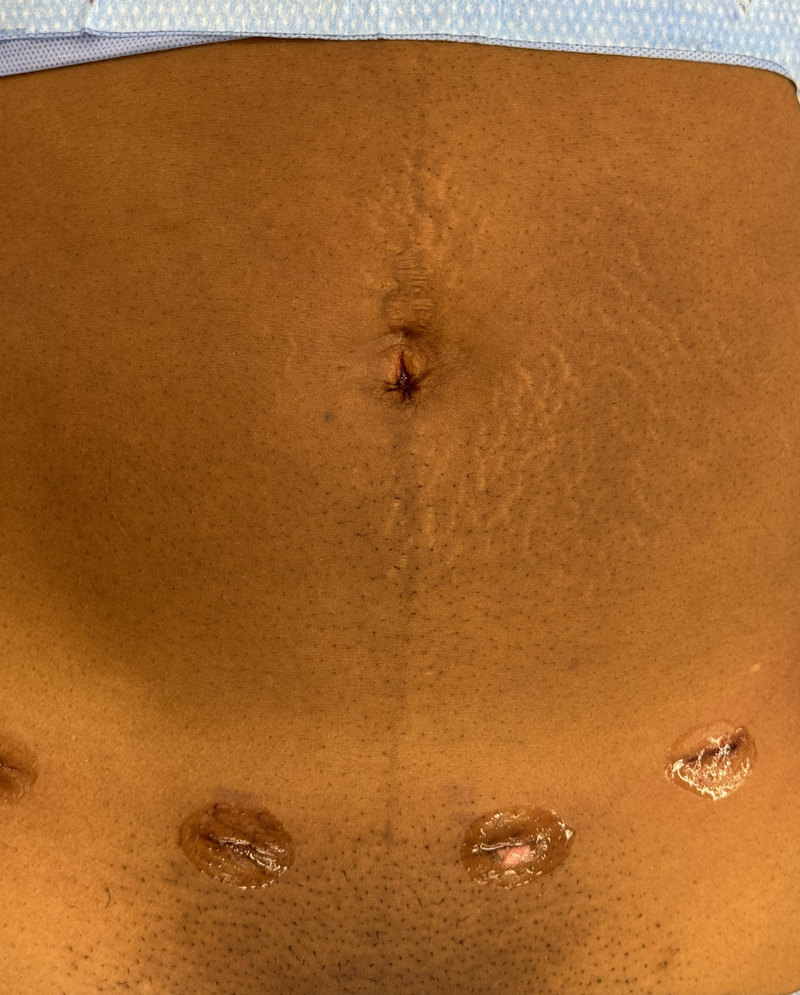
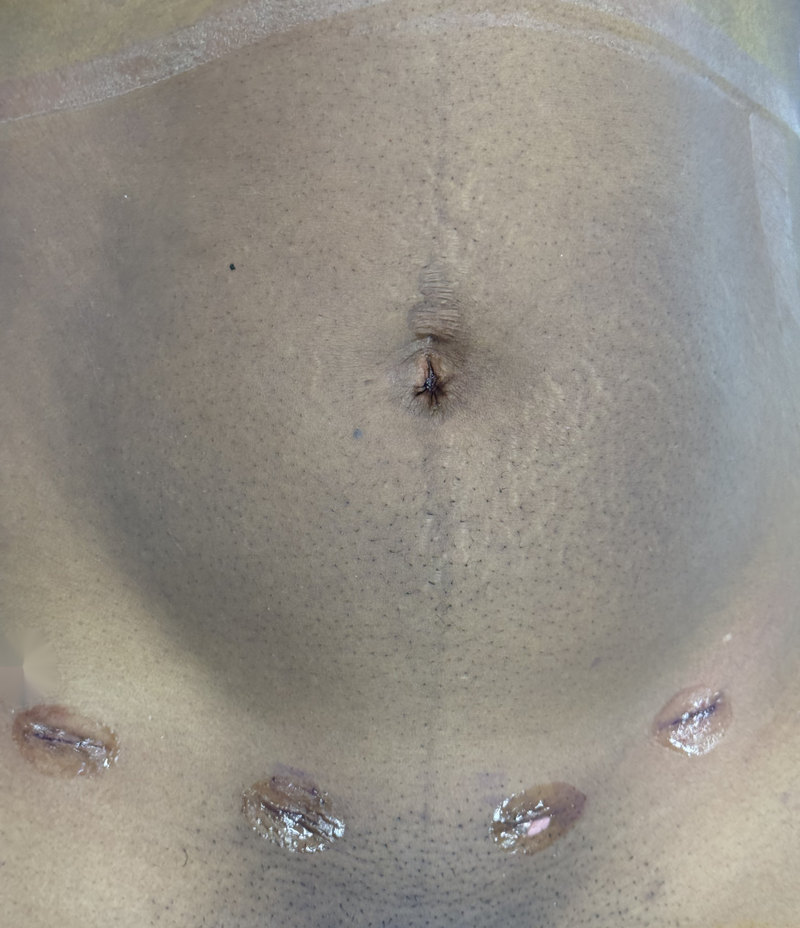
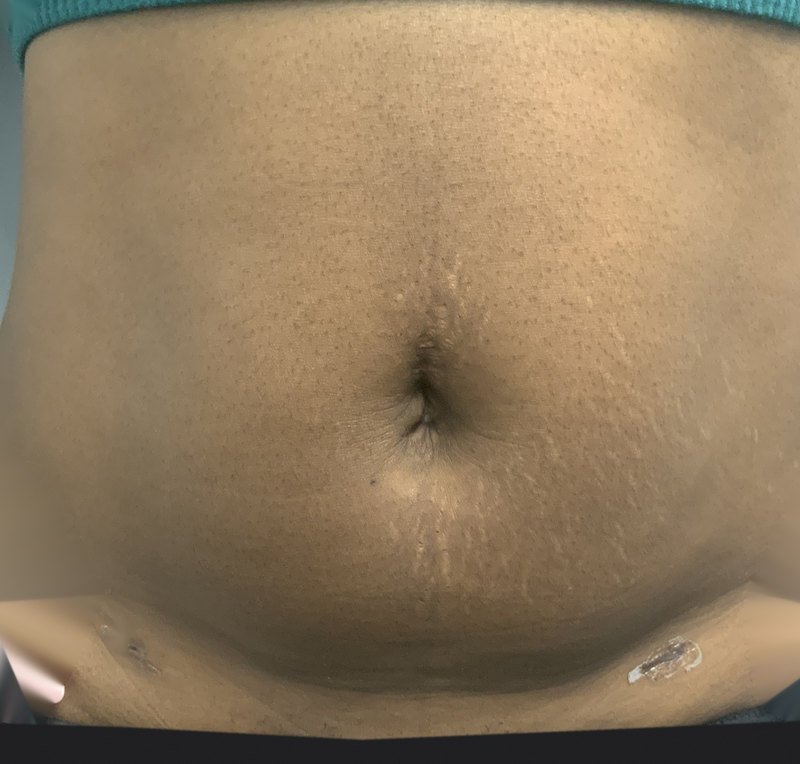
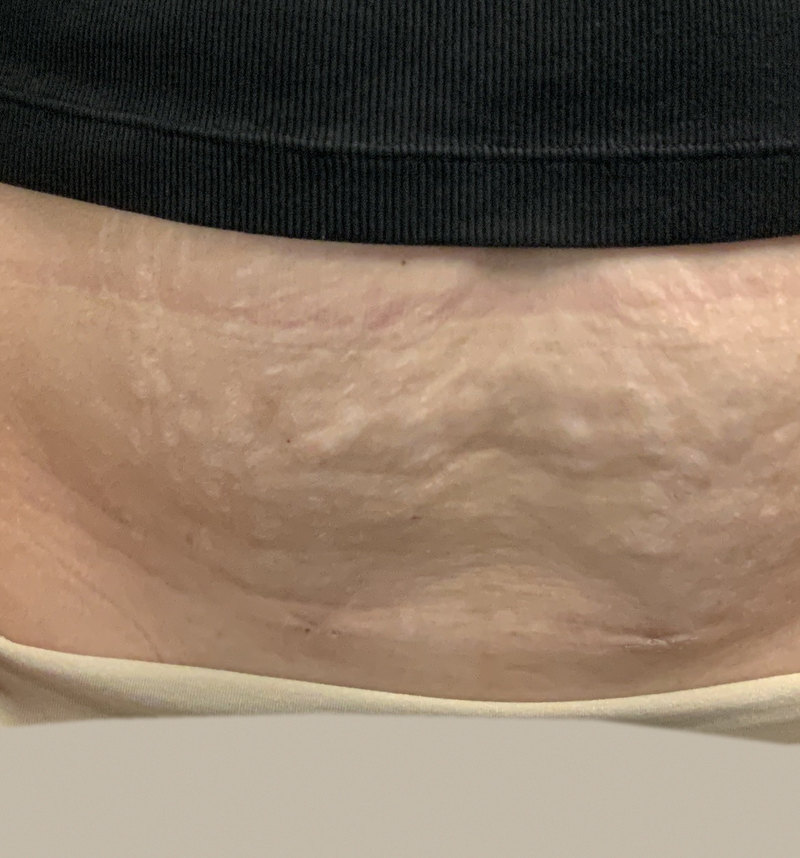
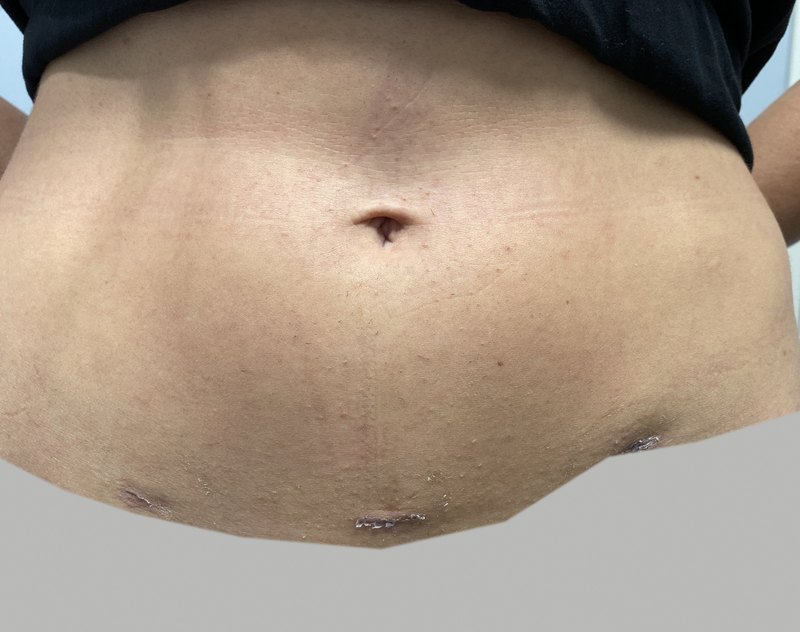
For select appropriate patients, Dr. Toomari offers a cosmetically appealing bikini line approach to gallbladder removal (cholecystectomy). The incisions are placed in the bikini line so they are hidden, for a virtually scarless cholecystectomy.
Last reviewed: November 21, 2026, by Dr. Nojan Toomari, DO, FACS
What this approach is
Gallbladder removal (cholecystectomy) is the usual treatment when gallstones cause attacks or complications. Dr. Toomari also offers a cosmetically appealing bikini line approach, which hides all incisions in the bikini line for a virtually scarless cholecystectomy. This is an option for select appropriate patients.
The gallbladder is still removed. The goal of this approach is to place the incisions where a bikini or brief would cover them, rather than on the upper abdomen.
For symptoms, evaluation, and the standard 4-incision upper-abdomen operation, see gallbladder surgery.
The 3-port technique
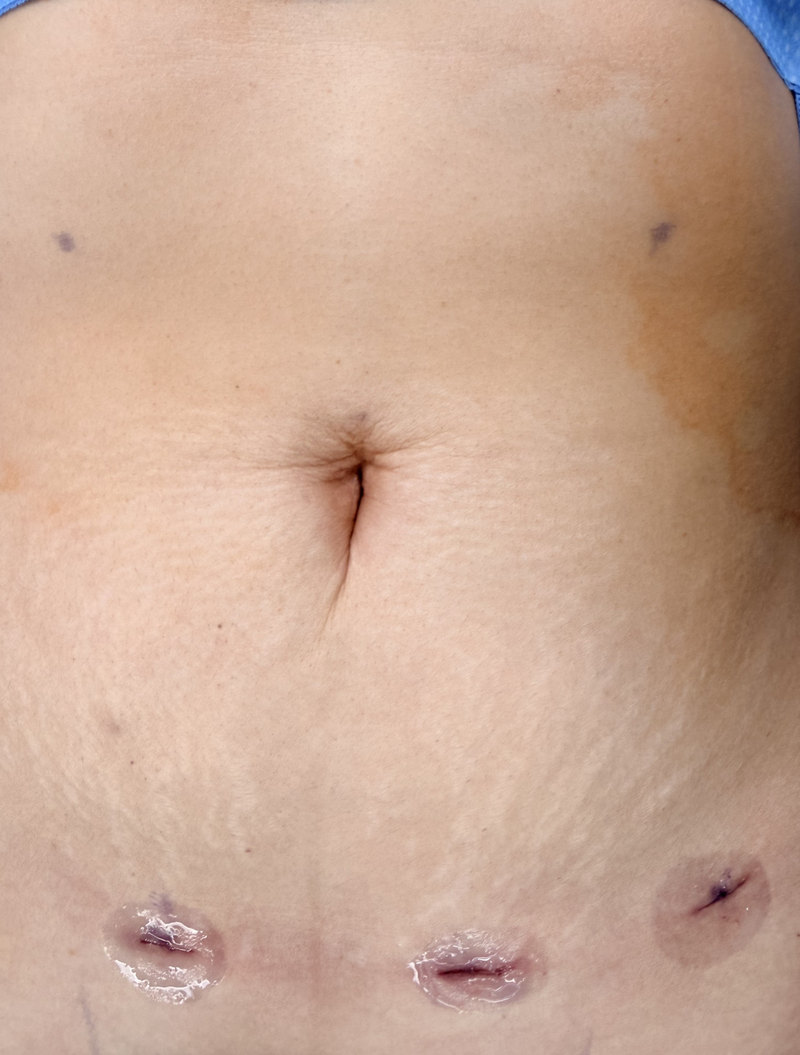
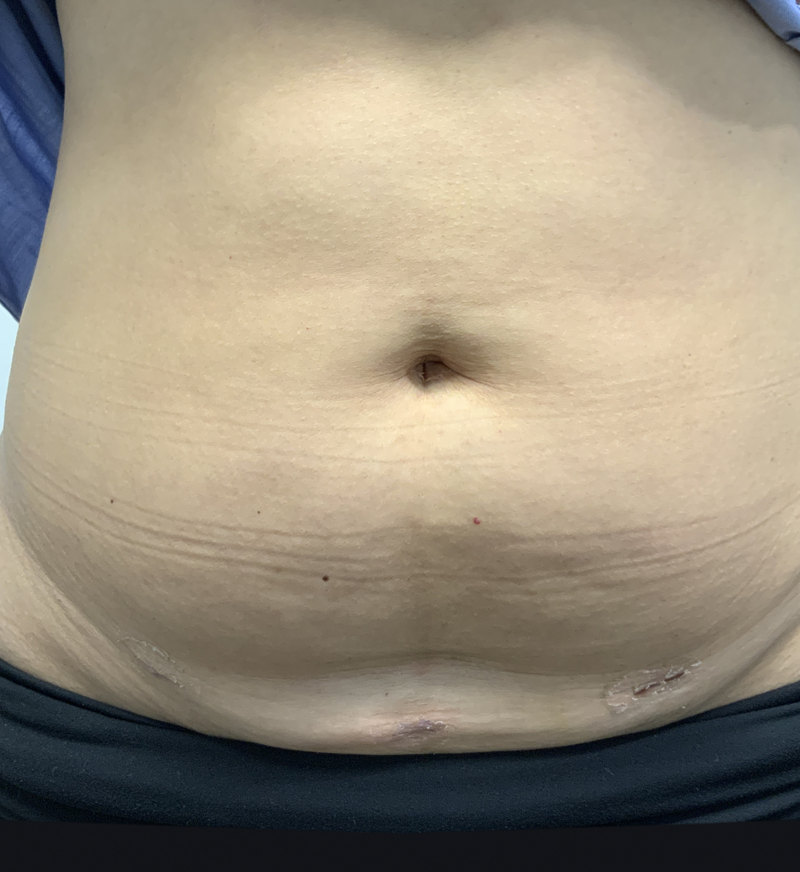
Dr. Toomari performs this operation as a robotic 3-port cholecystectomy: three 8 mm incisions in the bikini line, used for a camera and instruments.
In a robotic-assisted operation, the surgeon controls the instruments from a console at all times; the system does not operate on its own. He uses ICG (indocyanine green) Firefly fluorescence imaging to help identify the bile ducts. He also uses Firefly in some laparoscopic gallbladder operations. He does not do routine X-ray cholangiograms.
As with any minimally invasive gallbladder operation, the plan can be changed if that is safer in the moment, including conversion to an open operation. In Dr. Toomari's practice and personal experience, conversion to open surgery is very rare, occurring in fewer than 1 in 400 operations.
Who may be a candidate
This is not the right approach for every patient. It is typically offered to healthy, thinner patients who have not had major prior abdominal surgery. Gallbladder dyskinesia is a typical indication. Dr. Toomari will recommend an approach based on your anatomy, the condition of your gallbladder, prior surgery and your overall health, and will explain why.
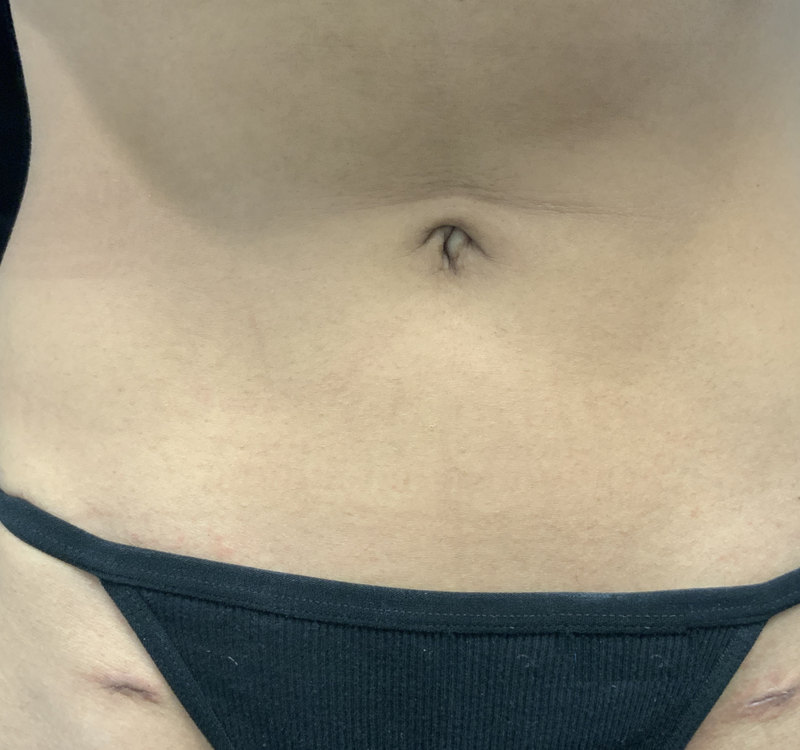
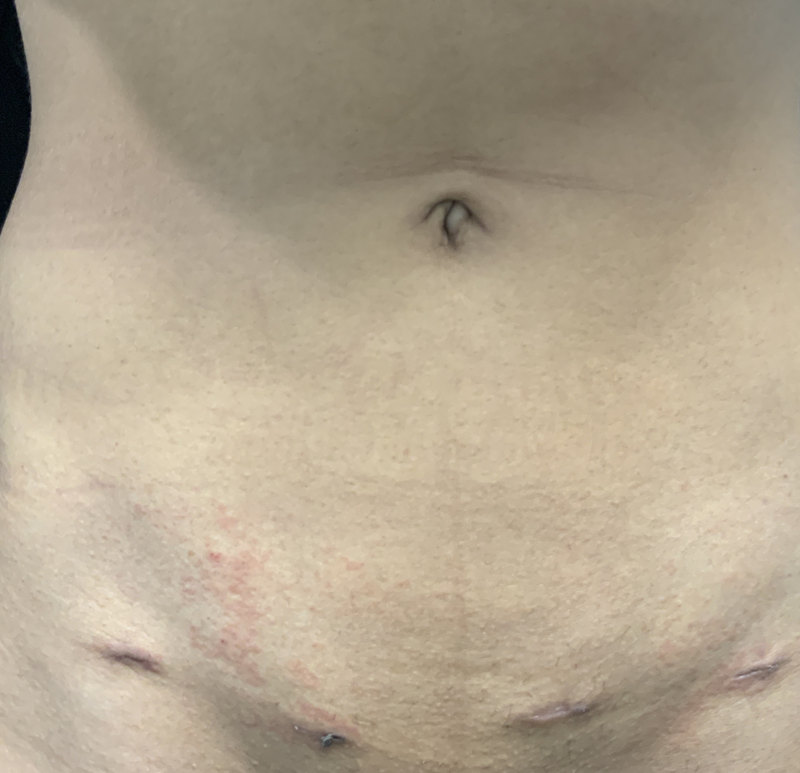
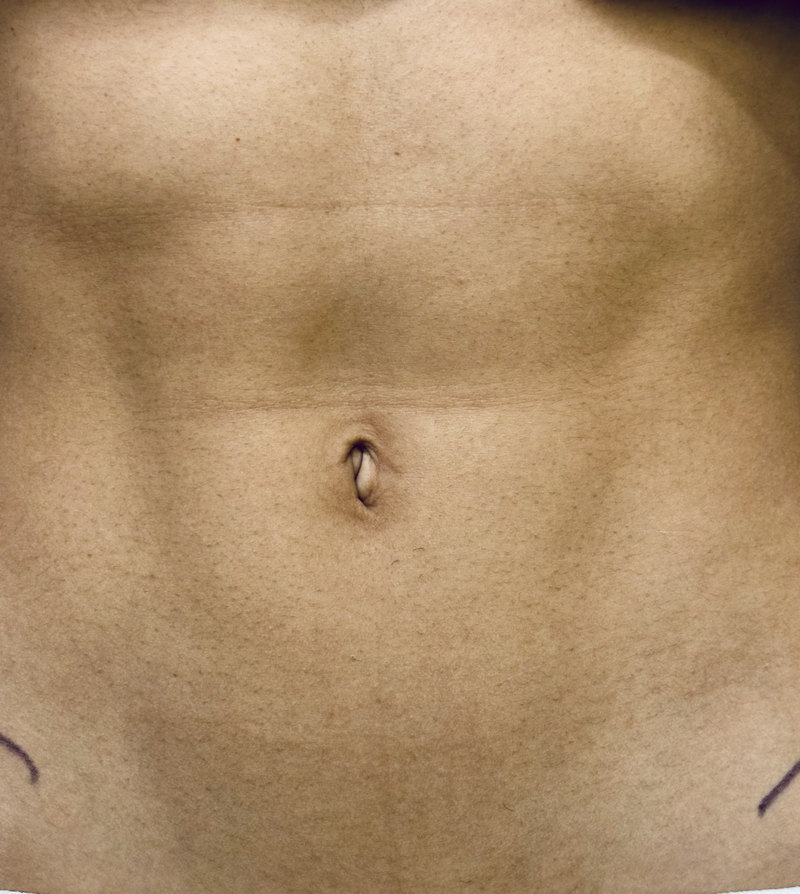
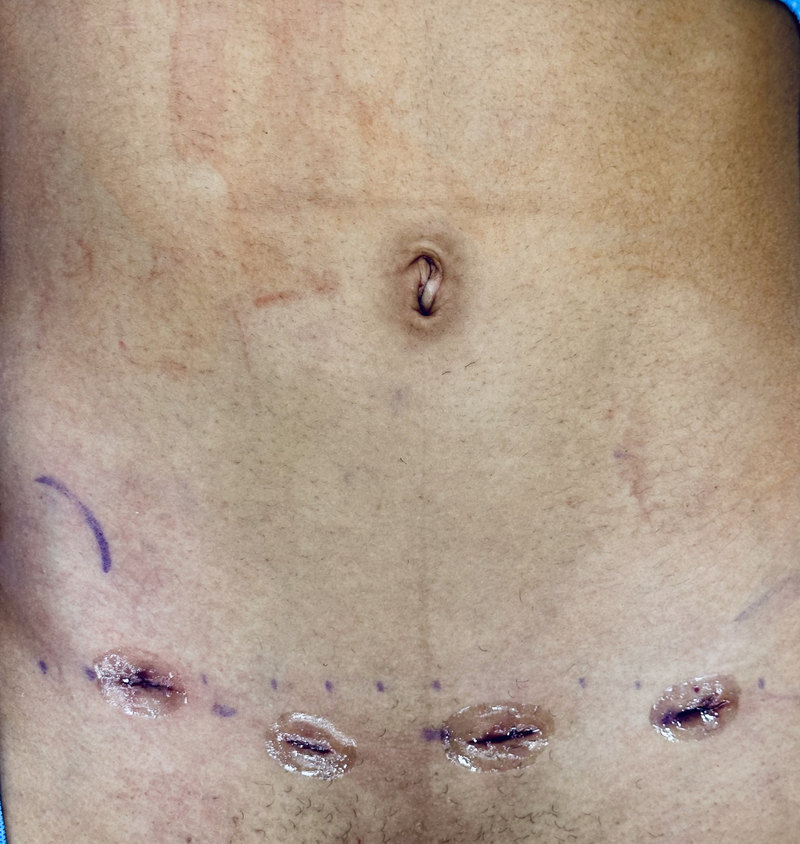
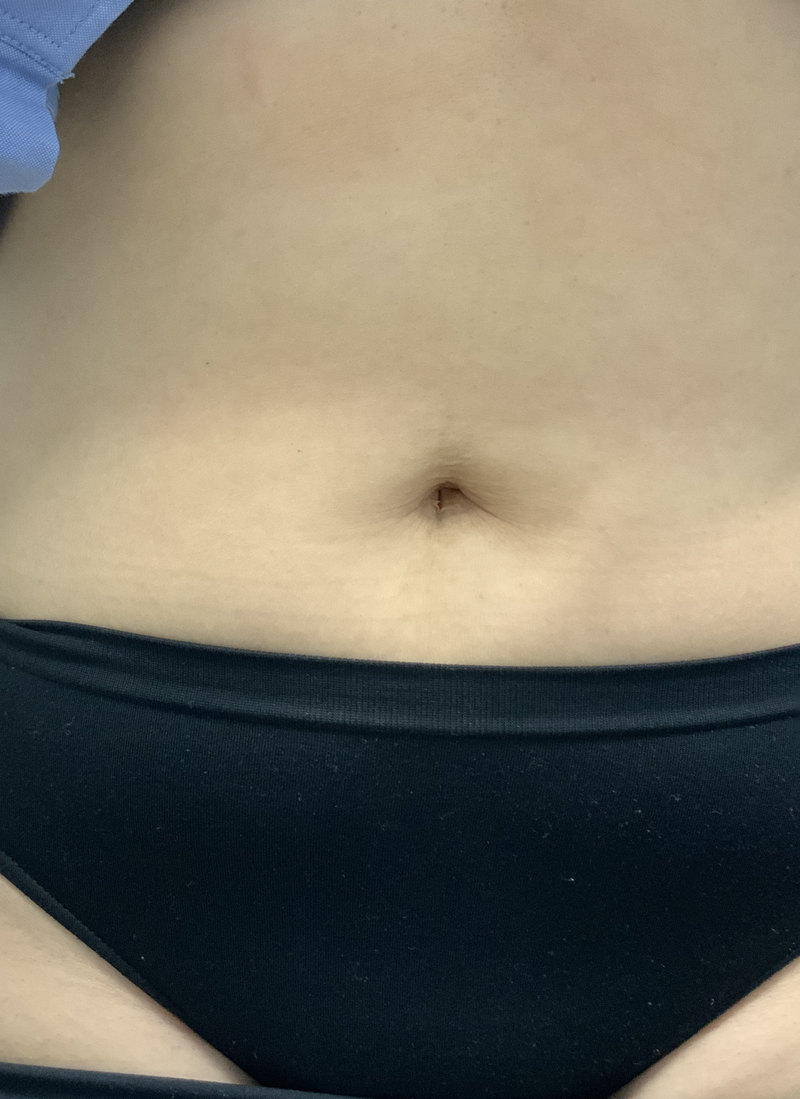
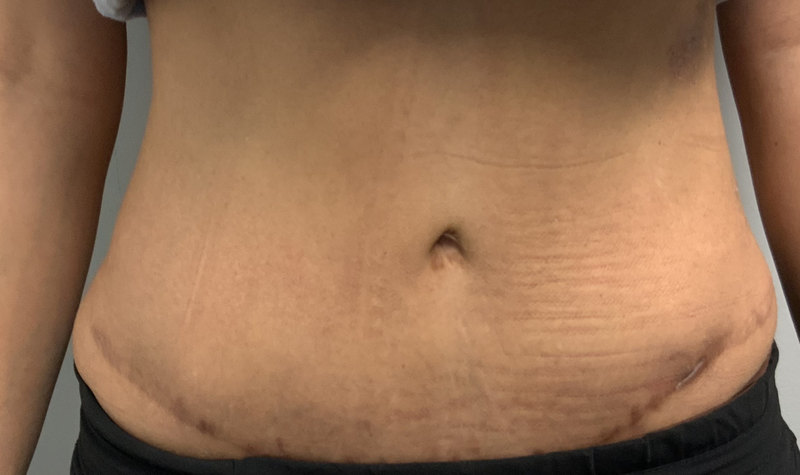
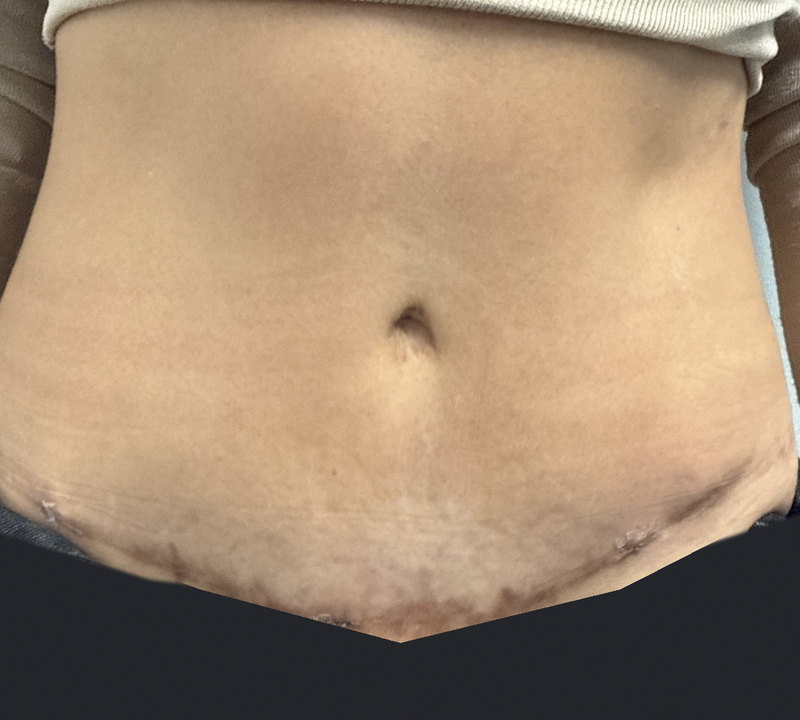
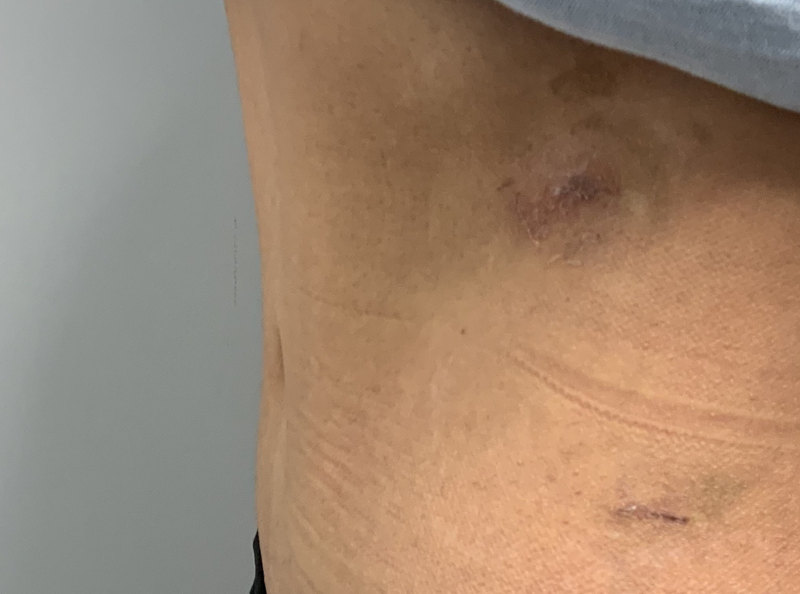
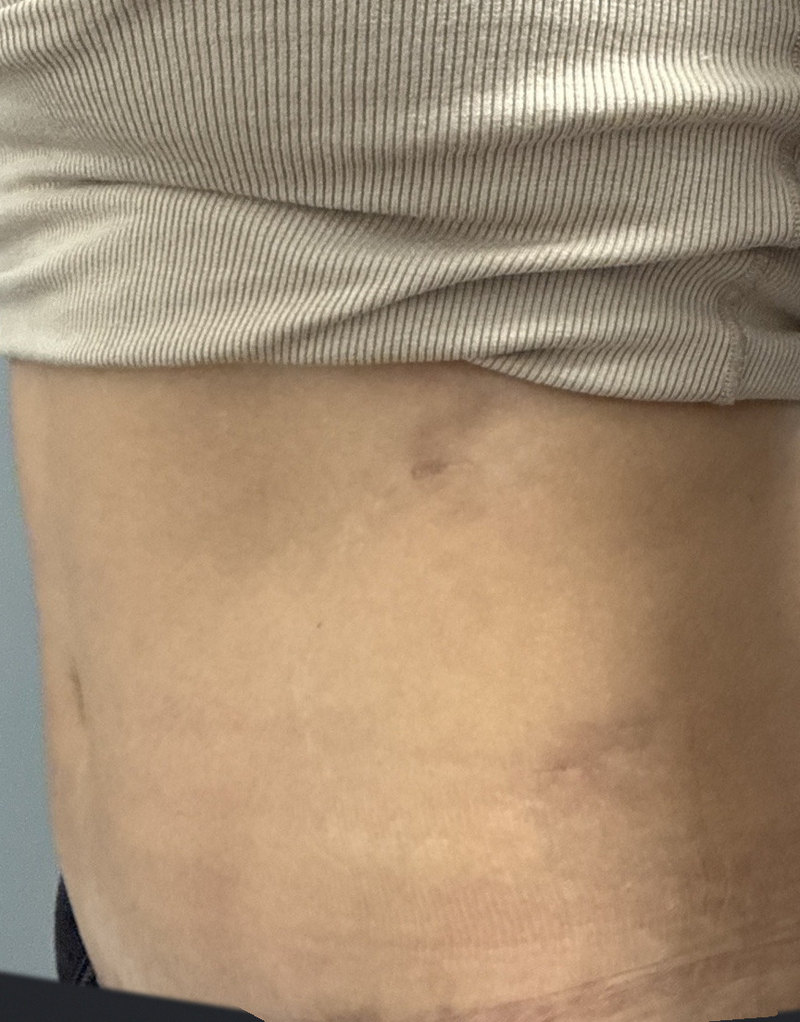
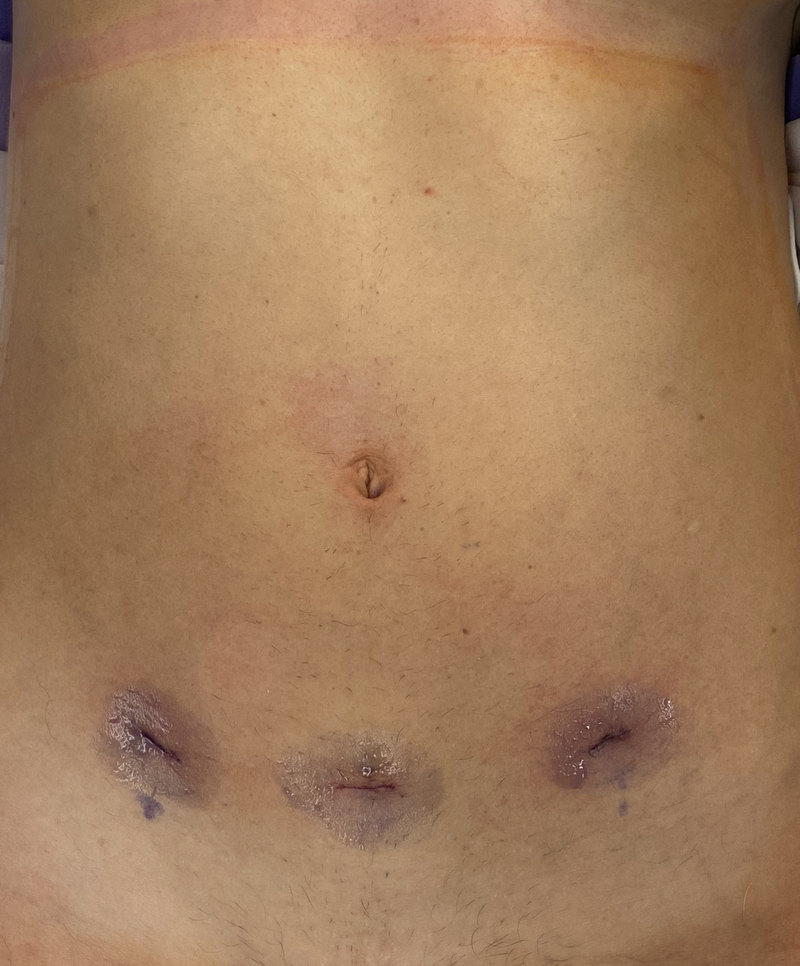
Example photos
Results vary. These photos are examples from patients who consented to website use, not a promise of a particular result. Individual results depend on your anatomy, the operation, and your health.
Risks and limitations
Every operation carries risk. Risks of gallbladder surgery include bleeding, infection, injury to the bile ducts or nearby organs, bile leak, a retained stone in the bile duct, conversion to an open operation, hernia at an incision, blood clots, and risks related to anesthesia. Some people have ongoing digestive symptoms after surgery. Dr. Toomari will review the risks that apply to you before you decide.
Recovery
Recovery after bikini line cholecystectomy is similar to a standard laparoscopic gallbladder removal. Most patients go home the same day. Follow a low-fat diet for the first 8 weeks after surgery. After robotic or laparoscopic surgery there are no lifting restrictions; after open surgery, avoid lifting for 8 weeks. Your own recovery depends on your health, the condition of your gallbladder and the type of operation. You will receive individual instructions about activity, driving, work and follow-up.
When to seek urgent care
After gallbladder surgery, call Dr. Toomari's office if you develop any of the following:
- Persistent fever over 101°F (38.3°C)
- Chills
- Bleeding
- Increasing abdominal swelling
- Worsening abdominal pain, or pain that is not relieved by your medicines
- Persistent nausea or vomiting
- Yellowing of the skin or eyes
- Persistent cough or shortness of breath
- Pus draining from any incision
- Redness around any incision that is getting worse or bigger
- Being unable to eat or drink liquids
Call 911 for severe symptoms. The same warning signs are listed on the gallbladder surgery page.
Care with Dr. Toomari
Dr. Nojan Toomari, DO, FACS, is a board-certified general surgeon (American Osteopathic Board of Surgery) who completed a fellowship in Advanced Minimally Invasive Gastrointestinal Surgery at the University of California, Irvine, in 2013–2014. He sees patients at our Encino office and operates at local hospitals and surgery centers. To schedule an evaluation, call (818) 570‑1845 or request a callback.
Frequently asked questions
How is this different from standard gallbladder surgery?
The gallbladder is still removed. What changes is where the incisions are placed. In Dr. Toomari's usual robotic or laparoscopic cholecystectomy, there are 4 small incisions in the upper abdomen. In the bikini line approach, the incisions are hidden in the bikini line. This is an option for select appropriate patients, not for everyone.
How many incisions are there?
The bikini line approach Dr. Toomari uses is a 3-port technique. The ports are 8 mm.
Is the operation robotic or laparoscopic?
Dr. Toomari performs the bikini line cholecystectomy as a robotic operation. In a robotic-assisted operation, the surgeon controls the instruments from a console at all times; the system does not operate on its own. He uses ICG (indocyanine green) Firefly fluorescence imaging to help identify the bile ducts. He also uses Firefly in some laparoscopic gallbladder operations. He does not do routine X-ray cholangiograms.
Who is a candidate?
It is an option for select appropriate patients, typically healthy, thinner patients who have not had major prior abdominal surgery. Gallbladder dyskinesia is a typical indication. Dr. Toomari will discuss whether it is a good fit based on your anatomy, the condition of your gallbladder, prior surgery and your overall health.
Is recovery different from the 4-incision upper-abdomen operation?
Recovery is similar to a standard laparoscopic gallbladder removal. Most patients go home the same day. Follow a low-fat diet for the first 8 weeks after surgery. After robotic or laparoscopic surgery there are no lifting restrictions. Follow the individual instructions you receive after your operation.
Related pages
References
- National Institute of Diabetes and Digestive and Kidney Diseases (NIDDK). Treatment for gallstones. Accessed November 20, 2026.
- MedlinePlus (U.S. National Library of Medicine). Laparoscopic gallbladder removal. Accessed November 20, 2026.
- Society of American Gastrointestinal and Endoscopic Surgeons (SAGES). Gallbladder removal surgery (cholecystectomy). Accessed November 20, 2026.
References are general patient-education sources from public health agencies and professional societies. They support the general statements on this page and are not a substitute for an individual evaluation.
General education, not medical advice. This page describes common approaches and is not individual medical advice. Whether surgery is appropriate, and which approach, depends on an examination and your own health. Please follow the individualized instructions of your treating clinician.
Last reviewed: November 21, 2026, by Dr. Nojan Toomari, DO, FACS
Talk with our office
Call during office hours, or send a short callback request and a member of our staff will contact you during business hours.
In an emergency, call 911
Online forms and email are not for emergencies and are not monitored as emergency channels. For severe, urgent or life-threatening symptoms, call 911 or go to the nearest emergency department.